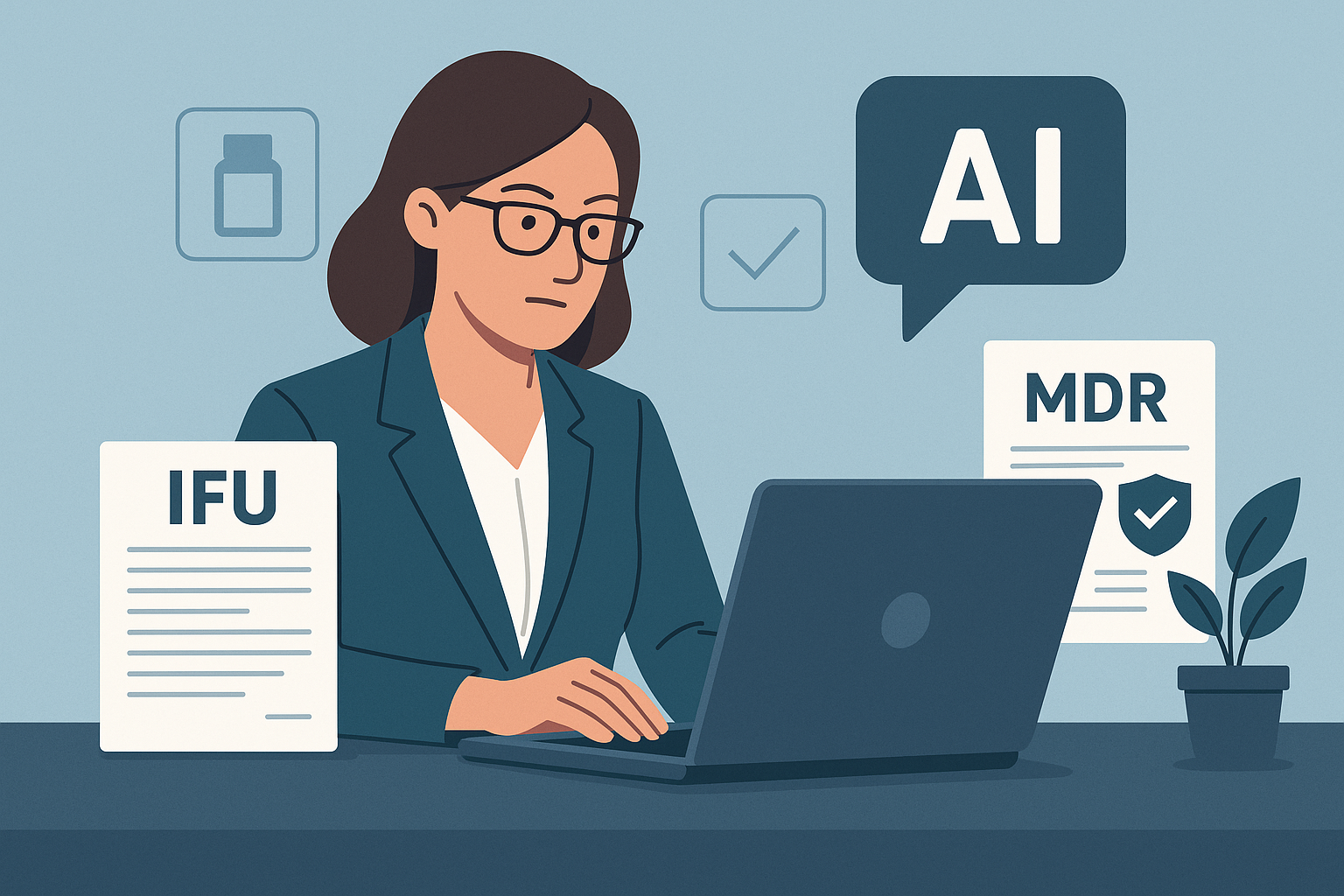
In sectors such as the pharmaceutical, medical device, biotechnology, and dermocosmetics industries, translation is a critical part of processes for regulatory compliance and risk management. Documents such as instructions for use, labels, technical dossiers, package inserts, and clinical materials must maintain their accuracy and consistency across all languages, as any error can have regulatory, operational, or reputational consequences.
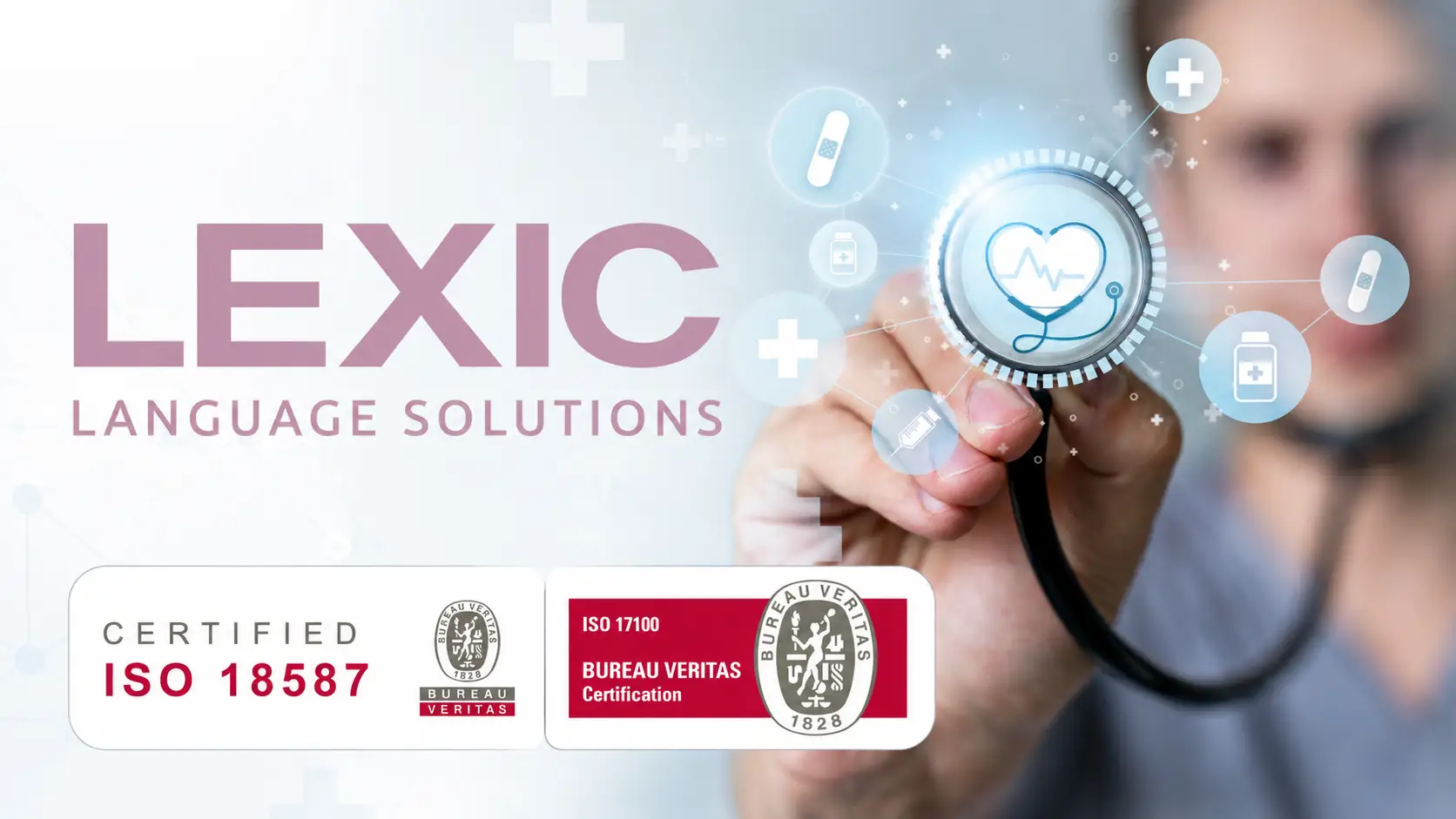
Therefore, at Lexic Language Solutions, we have renewed our ISO 17100 and ISO 18587 certifications, two international standards that accredit the quality and traceability of our language processes. This renewal ensures the continuity of a certification we have held uninterrupted since 2017 and which is periodically audited by external entities to guarantee compliance.
Two standards that address different needs
The ISO 17100 certification establishes the requirements for providing professional translation services. Beyond the quality of the final text, the standard evaluates how projects are managed, what criteria are applied to select translators and reviewers, how independent review is carried out, and what mechanisms exist to ensure the consistency and traceability of each job.
For organizations operating in regulated environments, this provides an additional guarantee of control. It’s not just about receiving a correct translation, but about being able to demonstrate that the document has followed a structured, supervised process aligned with internationally recognized standards.
ISO 18587, meanwhile, focuses on the post-editing processes of machine translation. Its importance has grown significantly in recent years as companies incorporate language technologies to improve efficiency and manage ever-increasing volumes of content.
However, in regulated documentation, automation alone is not enough. The standard establishes the requirements that the professional review of a translation generated by automated systems must meet so that the result achieves the level of quality required for professional use. In practice, this means that technology is used as a support tool, but always under the supervision of specialized linguists capable of detecting terminological errors, inconsistencies, or interpretations inappropriate to the context.
Audited Processes for Critical Documentation
The renewal of both certifications covers the translation and revision services, as well as the post-editing of machine translation, that Lexic provides to companies in the pharmaceutical, healthcare, biotechnology, and dermocosmetic sectors.
During the audit, key aspects of our language management system were reviewed, including the qualifications of the professionals involved in the projects, the revision processes, the management of terminological resources, the use of specialized tools, and the quality control mechanisms applied before delivery.
These elements become especially relevant when documentation is subject to regulatory requirements, inspections, or audits. In these types of environments, quality depends not only on the final result but also on the ability to demonstrate how it was produced, who was involved, and what controls were applied at each stage of the process.
What it means for our clients
For Regulatory Affairs, Quality, Medical Affairs, Clinical Operations, or Export departments, working with a certified provider adds an extra layer of security to multilingual project management.
The existence of audited processes helps reduce risks, facilitates document traceability, and promotes greater terminological consistency across markets and languages. It also allows for tackling complex or high-volume projects while maintaining consistent quality and control standards.
This approach is especially relevant for documentation such as instructions for use, labels, technical files, package inserts, clinical materials, or content aimed at healthcare professionals. In all these cases, terminological accuracy and document consistency are integral to the compliance process itself.
Specialization and Technology Under Control
Linguistic quality depends largely on the people involved in each project. Therefore, the translators and reviewers who collaborate with Lexic are selected based on their training, experience, and knowledge of specific areas such as pharmaceuticals, medical devices, biotechnology, or dermocosmetics.
This specialization allows us to approach each project with a deeper understanding of the document’s scientific, technical, and regulatory context—an especially important aspect when the content is intended for healthcare professionals, regulatory bodies, or patients.
At the same time, we continue to incorporate technologies that bring efficiency and consistency to linguistic processes. However, the ISO 18587 update reinforces a fundamental principle: technology must be used judiciously and always under human supervision. The combination of advanced tools and expert knowledge is what allows us to obtain reliable results in environments where accuracy is non-negotiable.
A Continued Commitment to Quality
The renewal of our ISO 17100 and ISO 18587 certifications reflects our commitment to continuing to work with the highest standards of quality, traceability, and linguistic expertise.
For our clients, this guarantees a partner capable of managing critical documentation through audited processes, specialized professionals, and the responsible application of technology.
Because in regulated sectors, translation quality is not just a linguistic issue. It is also a matter of compliance, trust, and risk management.
Contact Lexic to discuss your organization’s linguistic needs.