
From Innovation to Adoption: Why Localisation Should Start with the Product
The European HealthTech Forum 2026, held in Alcobendas on 1 and 2 October, brought together hospitals, industry, start-ups and institutions from Europe and Latin America
From Innovation to Adoption: Why Localisation Should Start with the Product
The European HealthTech Forum 2026, held in Alcobendas on 1 and 2 October, brought together hospitals, industry, start-ups and institutions from Europe and Latin America
From Innovation to Adoption: Why Localisation Should Start with the Product
The European HealthTech Forum 2026, held in Alcobendas on 1 and 2 October, brought together hospitals, industry, start-ups and institutions from Europe and Latin America

Is MTPE really cheaper when you supply the AI draft yourself?
A practical, evidence-based look at what post-editing actually costs when the first draft comes from your own AI tool — and when it doesn’t.

MedTech Translation: The Linguistic Precision the Medical Device Sector Demands
MedTech translation is not simply a matter of transferring technical information from one language to another, but of meeting the linguistic and regulatory requirements applicable in each market.

Linguistic validation in clinical trials
In multicentre clinical trials, no result can be considered reliable if patients do not fully understand what they are being asked. This is the challenge
Is MTPE really cheaper when you supply the AI draft yourself?
A practical, evidence-based look at what post-editing actually costs when the first draft comes from your own AI tool — and when it doesn’t.
MedTech Translation: The Linguistic Precision the Medical Device Sector Demands
MedTech translation is not simply a matter of transferring technical information from one language to another, but of meeting the linguistic and regulatory requirements applicable in each market.
Linguistic validation in clinical trials
In multicentre clinical trials, no result can be considered reliable if patients do not fully understand what they are being asked. This is the challenge

How to evaluate translation services in the healthcare sector
When a pharmaceutical company launches a medicine across fifteen markets simultaneously, when a medical device manufacturer needs to comply with MDR requirements, or when a dermocosmetics brand

Pharmaceutical translation: why precision can determine a product launch
A clinical trial can take years to generate robust results. A regulatory submission may go through months of assessment. And yet, all that work can

What Does Translation Proofreading Involve and Why It’s Not an Optional Extra
In specialised translation, proofreading is often seen as the final administrative step in the process – little more than a last minute check to catch

In sectors such as the pharmaceutical, medical device, biotechnology, and dermocosmetics industries, translation is a critical part of processes for regulatory compliance and risk management.

Patient Safety and Regulatory Compliance through Medical Translation
In the healthcare sector, linguistic accuracy is not merely a matter of quality—it is an ethical, clinical, and legal imperative. A misinterpreted figure in a clinical trial

Inside the language industry: Interview with Sonia Tirado
“Inside the language industry” is a series of conversations with professionals from across translation, interpreting and localisation. Through these conversations, we want to give a voice to

How the EU AI Act is Reshaping Innovation in Healthcare Products
The healthcare product sector is experiencing a technological transformation like never before. Algorithms analysing radiology images, natural language models summarising complex clinical records—the use of

How to Prepare IFU Translations for an MDR Audit
Under the EU Medical Device Regulation, the Instructions for Use (IFU) are no longer just supporting documentation—they are a core part of the safety information

From SmPC to EMA Approval: 5 Steps to Risk-Free Pharmaceutical Translation
In the European regulatory environment, precision is not just a matter of linguistic quality—it is a compliance requirement. An error in the translation of a

AI-generated voice-over has rapidly evolved from a technological curiosity into a practical operational resource within the communication strategies of many organisations in the healthcare sector.

The future of audiovisual content in Life Sciences: accessibility as a strategic challenge
Audiovisual accessibility is no longer an emerging trend in the healthcare sector. Since 2025, it has become a strategic imperative. The entry into force of

Inside the language industry: Interview with Tatiana Salaet
This interview marks the start of a new series spotlighting professionals from across the translation, interpreting and localisation landscape. Through these conversations, we want to shine a light on

The Risks of Using AI in Regulatory Dossier Translation: Hallucinations and Critical Errors
AI is rapidly reshaping how life sciences organisations work — and translation is no exception. Faced with ever-growing submission volumes, compressed timelines and global programmes that rarely run sequentially, many

An MDR/IVDR Text Map: What May Need Translating in the EU (and How to Plan It Without Improvising)
In Life Sciences, gaining access to the European market is no longer only about innovation, clinical evidence and manufacturing capacity. With MDR and IVDR now firmly embedded,

5 hybrid strategies: machine translation + human review for healthcare regulatory compliance
Healthcare and Life Sciences companies are under growing pressure. Demand for language services in this sector is rising by around 9.5% per year, driven by

7 critical mistakes to avoid when translating IFUs and medical product labelling
Regulatory Affairs professionals operate under constant pressure from regulations such as the MDR and IVDR, which have turned documentation into a critical component of the medical product itself. The

Specialist Translation in Clinical Trials: A Strategic Asset for CROs
Delivering a global clinical trial successfully is a complex operational challenge. For a Contract Research Organisation (CRO), the focus is firmly on execution: coordinating multiple stakeholders, countries,

How to Design a Translation Workflow Compliant with MDR and ISO 13485 in 5 Steps
Regulatory and Quality leaders in the medical device industry face a significant challenge: meeting the demanding linguistic requirements of the Medical Device Regulation (MDR) and
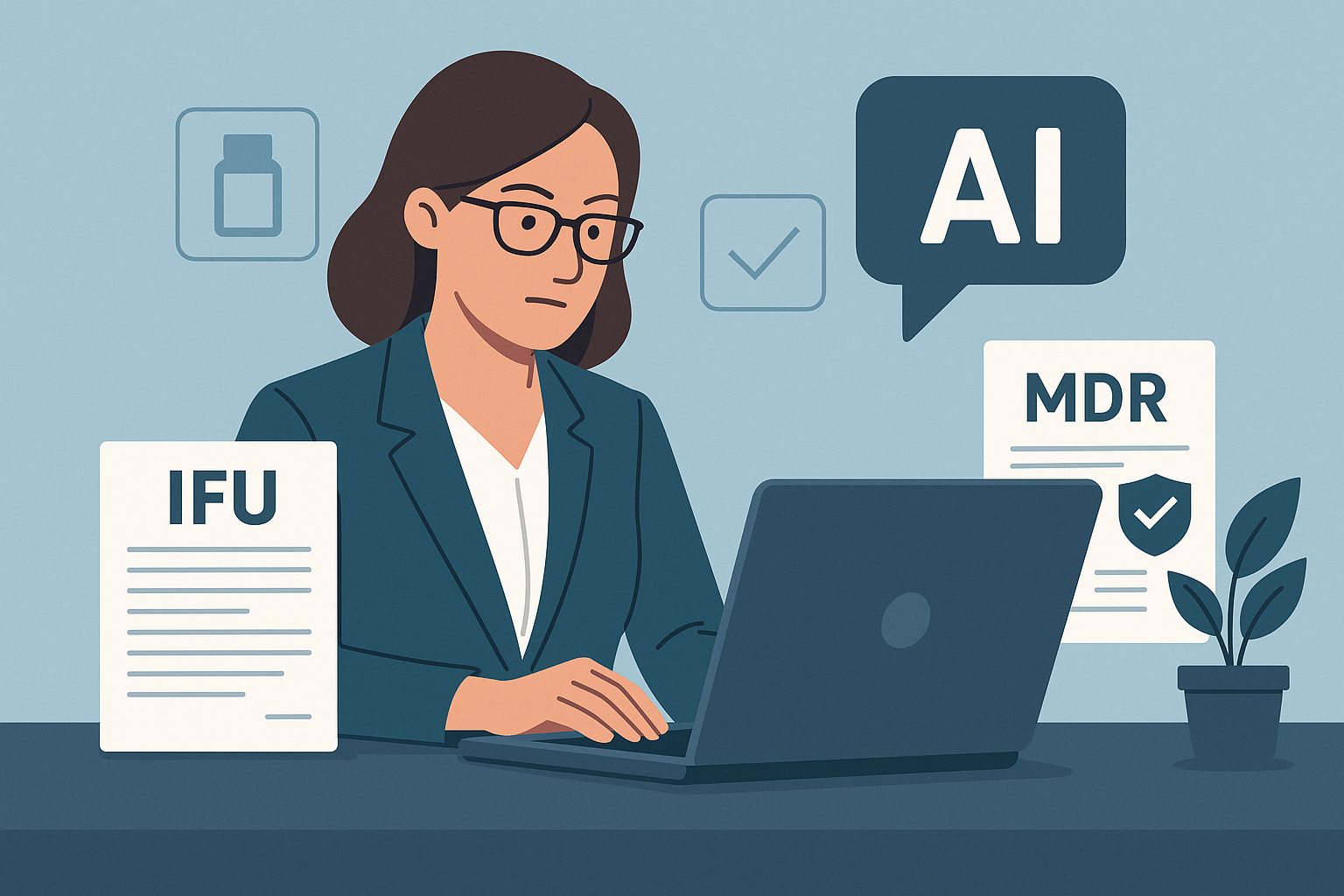
Using AI for Translation: Stay MDR-Compliant
Are you using Machine Translation or AI to translate medical device documentation? Wondering whether that could lead to non-compliance with Regulation (EU) 2017/745 (MDR)? Here’s what you need to know.
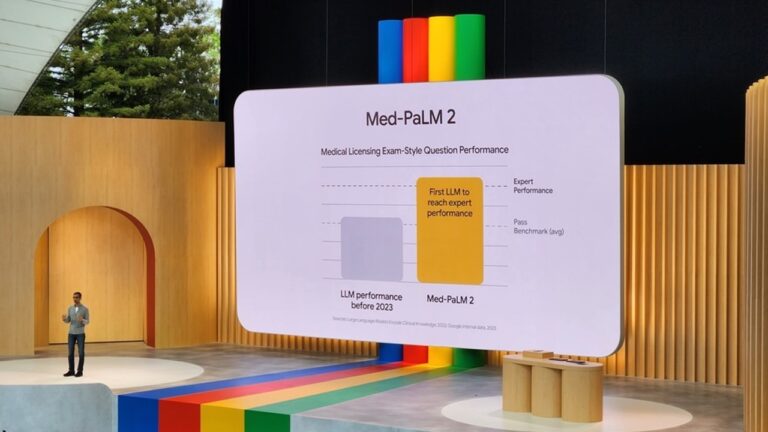
Understanding Med-PaLM: Google’s Generative AI in Healthcare
Med-PaLM, a groundbreaking large language model (LLM) developed by Google, signifies a significant advancement in the application of artificial intelligence (AI) within the healthcare sector.

Translating Informed Consent Forms & Lay language
In the realm of clinical trials, where patients are invited to participate in experimental treatments or research studies, informed consent is not only crucial but

E-learning’s pivotal role in pharma sales training
Navigating the complexities of the pharmaceutical and healthcare sectors requires a robust approach to training sales teams efficiently and effectively. The industry faces a continuous

Medical translation in clinical trials protocols: Bridging the gap
In today’s interconnected world, the realm of medicine depends profoundly on linguists to bridge language barriers, especially in clinical trials. Translators are, indeed, the unsung

Unlocking international success through software localization
In today’s competitive digital landscape, meeting user expectations requires more than just a sleek interface and smooth user experience. To truly captivate your target market,

Translating from English into Spanish: Common challenges
Translating from one language to another requires extensive knowledge of both grammar and culture. Professional translators must know the rules of a language as well

5 Benefits of Centralizing Your Translation Work
In today’s world, multinational organizations face the ongoing challenge of effective communication across different languages and cultures. One crucial aspect of this challenge is how

Machine translation with a human-in-the-loop
Machine translation has significantly impacted the global content industry, revolutionizing the way global content is translated and localized. The introduction of advanced algorithms and neural