“Inside the language industry” is a series of conversations with professionals from across translation, interpreting and localisation. Through these conversations, we want to give a voice to the people behind the sector, learn about their careers, insights and experiences, and explore how an industry in constant transformation is evolving. And also — why not— to champion the value of the human factor in a sector where technology is advancing at extraordinary speed, but where human experience, judgement and know-how continue to make all the difference.
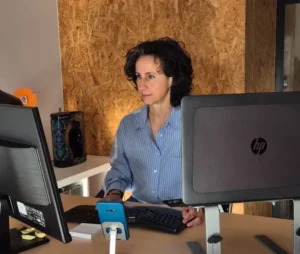
Today we speak to Sonia Tirado, a medical and scientific translator, to look back at how the profession has changed in recent years and consider what the future may hold.

Q: How did your journey into medical translation begin? Was it a conscious choice, or an opportunity that ended up shaping your career?
A: More than a choice or a coincidence, it was a gradual discovery. At university I specialised in scientific and technical translation, and I began working in technical translation and localisation. From there, I moved into projects involving medical diagnostic devices — that space where the technical and the medical meet — and, little by little, medical content began to outweigh the technical side until it became one of the main pillars of my work.
Q: What drew you — or still draws you —to the medical field compared with other areas oftranslation??
A: What attracts me is that, in this field, my work connects directly with something as essential as health, and that gives every word a weight that motivates me. I like to think it has a positive impact on people’s wellbeing… and on animals’ wellbeing too.
Q: If you had to describe the profession today in one sentence, what would it be?
A: Today, linguists need to ensure that human judgement continues to guide accuracy and clarity in a setting where lives are at stake and strict regulations apply.
Q: Precision is crucial in this sector. How do you manage the responsibility of working with texts that can have a direct impact on people’s health?
A: I train continuously — in medicine, as well as in the processes and tools of the profession — so I can work with the confidence that the end result will be of the highest quality I can offer.
I also assess every assignment carefully and do not accept tasks where I cannot work to the level of professionalism expected of me.
And I do not leave everything to individual judgement: independent review and validated terminology are part of my safety net, and when I spot an error or ambiguity in the source text, I flag it so that it is not carried over.
Q: Tell us, as far as you can, about a project that seemed “impossible” — because of its complexity,volumeor deadline — and that you feel particularly proud of today.
A: There is one project I associate with the word “impossible”. A few years ago, I agreed to translate the updated website of a direct client specialising in laboratory software. Because they knew the product in such depth, the client’s marketing department suggested changes to the translation that involved a great deal of extra time — something that, as we know, is not exactly abundant in our sector — and that could have been avoided with a more detailed briefing, style guide and glossary. The client was very receptive: we coordinated the creation of solid reference material and, from then on, that collaboration became a stable professional relationship. I am proud of it because it showed that our work goes far beyond translation: bringing expert judgement to the process itself is part of the added value we provide.
Q: Has any assignment taken you completely out of your comfort zone? What did you learn from that experience?
A: Many have. The most demanding work is translating research material: you have innovations in your hands that have never been translated before, so there are no glossaries or previous references to rely on. What I have learned is not to improvise in the face of that gap: to research thoroughly, propose a reasoned solution and rely on dialogue with the client to validate that the concept has been properly understood. Above all, I have learned to handle uncertainty: to accept that sometimes you move forward without a map, and that asking for clarification is not a weakness, but part of being rigorous.
Q: And has any project had a particular impact on you, professionally or personally?
A: Rather than one specific project, I am very interested in plain-language work. I especially enjoy projects with this focus, such as informed consent forms, apps or marketing materials aimed directly at patients. In fact, that interest led me to something more personal: I volunteer to help patients understand medical reports they do not understand, and I accompany them to appointments when they need it. Seeing first-hand that someone understands what is happening to them is the best confirmation of why I do this work.
Q: When you are faced with a particularly complex text, what goes on “behind the scenes”? What does your internal work process look like? Do you have any method of your own that you can reveal?
A: Yes. Over the years, I have learned that the more systematic I am in the way I work, the better the results. I use checklists so that I do not skip any steps. Before I begin, I read the briefing and all the instructions and materials provided in depth. When necessary, I also do extensive research so that I am working on familiar ground. During the project, I keep a record of anything that is unclear so I can check it with the client, rather than resolving it blindly. And at the end, I carry out a double QA: with tools and also visually, because there are things you only spot by reading. Of course, everything is adapted to the service each client has requested.
Q: Medicine is constantly advancing. How do you manage that ongoing need to stay up to date and keep learning?
A: In my case, the work itself already keeps me up to date: translating R&D material means being in constant contact with the latest developments in the sector, almost before they are published. I also set aside time to train not only in medicine, but also in tools, processes, regulations and AI. And today it is easier than ever: publications, videos and training courses for linguists and professionals in the field… The resources are there; what makes the difference is turning learning into a habit.
Q: If you could explain in a few words what a specialist medical translator contributes that is notimmediatelyvisible, what would you say?
A: That when we do our job well, it goes unnoticed. The invisible work — clear language, an error detected in time, coherent and verified terminology, questions resolved — is precisely what protects the client and the patients.
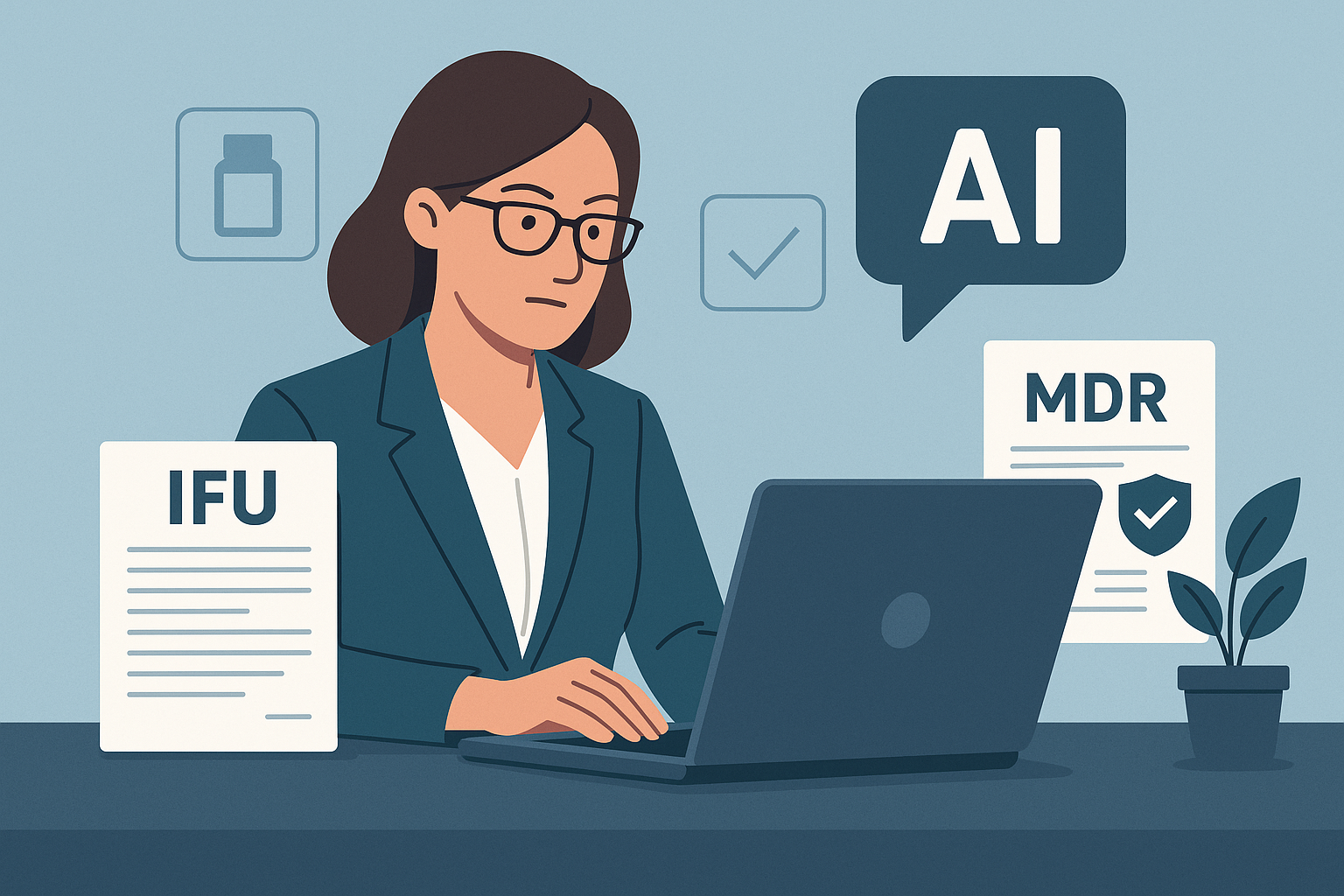
Q: Technology and AI are transforming the entire sector. How have they changed your day-to-day work? What genuinely helps you, and what gives youcause forconcern or raises questions?
A: When I started out in translation, many professionals did not use a computer. I remember that translating by hand and with dictionaries was valued, and that many colleagues with more years in the profession were wary of all the resources we now consider essential. I think something similar is happening with the arrival of AI: we are afraid of what is new, but we cannot look the other way because it is already part of our work and our lives.
My biggest concerns at the moment? The extent to which AI models hallucinate, their ability to maintain data confidentiality — especially in medicine — and the widespread belief that anything done with AI is correct and equivalent to work done by humans.
Q: In this increasingly digital environment, where do you feel human experience and judgement still make the difference?
A: I use AI when the client requests it and the project allows it, but there is still ground where human judgement is irreplaceable. In addition to the points I have already mentioned, the lack of naturalness is very clear: in some texts, rigid and repetitive constructions are acceptable, but in others, the reader or listener immediately recognises that something sounds forced and flat. Knowing which materials lend themselves to AI and which do not is already a matter of judgement. And there is more: detecting that the source text contains a hidden error, finding the right term, judging whether a concept has genuinely been understood, or knowing when to ask rather than assume. AI processes what already exists; judgement comes into play precisely where there is no ready-made answer.
Q: And finally, if you had the next generation of medical translators in front of you, what essential advice would you give them?
A: I would tell them three things. First, specialise, whether through courses or a master’s degree in specialised translation, or even training in the healthcare field. Second, I would advise them to look for internships or mentoring, because there is no better way into the profession than alongside someone experienced who can guide you. And third, regarding AI, be critical. If we are demanding and do not accept just anything, then as professionals we will be able to recognise the tool’s limitations and compensate for them with judgement.