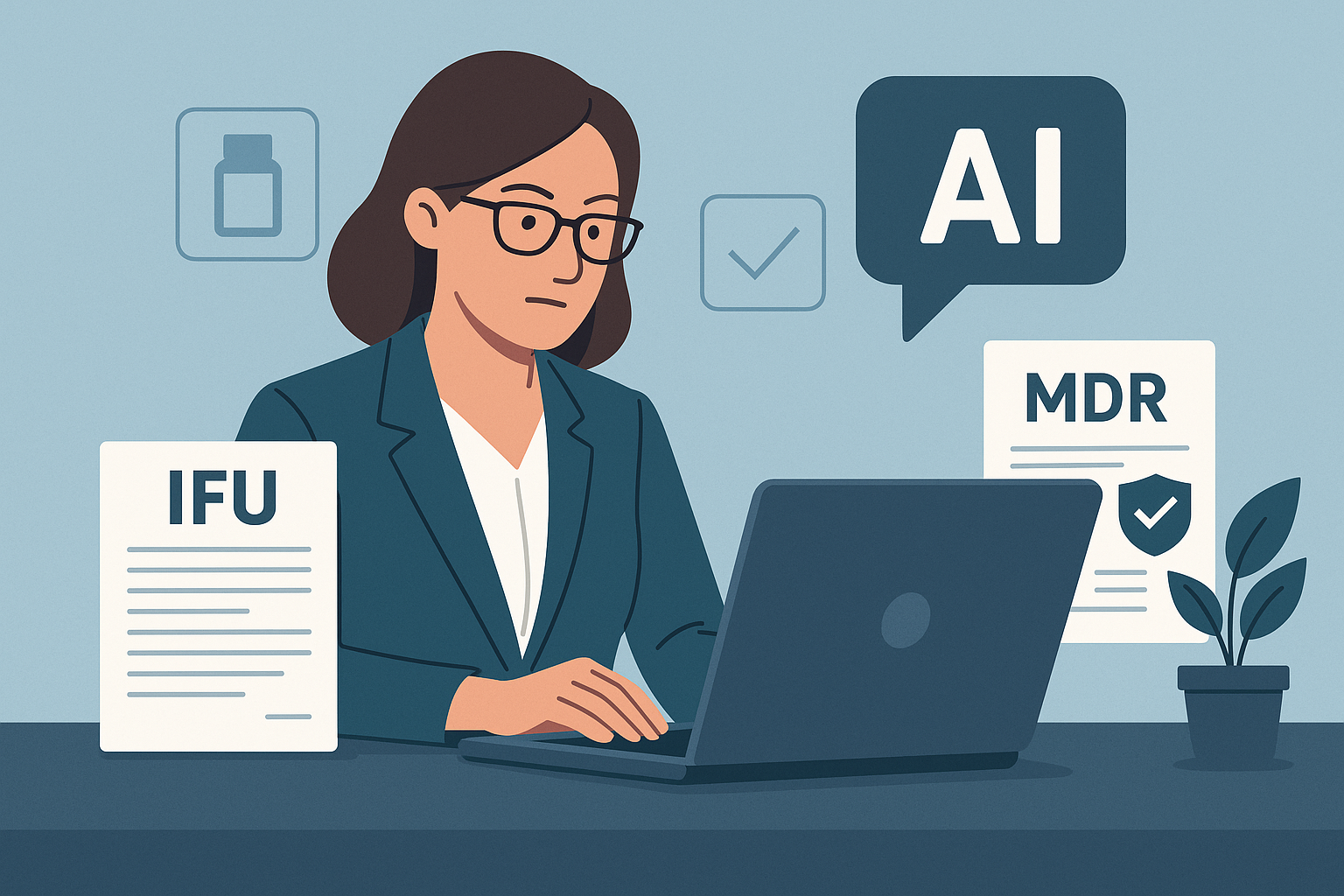
Regulatory and Quality leaders in the medical device industry face a significant challenge: meeting the demanding linguistic requirements of the Medical Device Regulation (MDR) and the In Vitro Diagnostic Regulation (IVDR) ahead of their respective 2028 and 2027 deadlines. This means translating documentation into as many as 24 European languages.
In this context, poor translation is not a minor mistake—it is a strategic risk that can trigger audit non-conformities, jeopardise essential certifications and, in the worst-case scenario, delay access to key markets. To mitigate these risks, it is essential to design a translation workflow that acts as a robust, fully auditable extension of your own Quality Management System.
1. Start with a documented quality process, not just a translator
The foundation of a compliant translation workflow does not lie in selecting a single linguist, but in implementing a documented, auditable, multi-step quality process. To be defensible before a Notified Body, this process must include at least the following five steps:
- Preliminary analysis
An initial assessment to allocate the optimal technical and human resources to each project, ensuring that the right specialists are involved from the outset. - Translation
Carried out by a qualified native translator specialising in medical devices, with at least five years of proven experience in medical and/or technical translation. - Editing/Revision
A full review of the translated text by a second, equally qualified linguist who verifies accuracy, consistency and appropriate terminology use. - Desktop publishing (DTP)
Specific quality checks on the final document layout—such as IFUs or labels—to ensure that no errors are introduced during the formatting stage. - Final quality check
A final verification conducted by the responsible Project Manager, confirming that all process steps have been followed and that the final deliverable meets both regulatory and client requirements.
This structured approach, aligned with standards such as ISO 17100 or ISO 18587, provides the traceability required by Quality Management Systems under ISO 13485. It represents the tangible value of a specialist, health-focused service like Lexic’s, quite different from the one-size-fits-all solutions offered by more generalist providers, or the unpredictability of independent translators.

2. Integrate technology intelligently and responsibly
A modern strategic partner does not offer a single universal solution. Instead, it provides a consultative approach that adapts the service level to the risk profile of each document, balancing regulatory requirements with budget considerations. An efficient workflow must combine high-quality human review with the responsible use of technology.
Our service offering includes:
Premium option (ISO 17100 certified)
A human expert translation followed by a full review by a second qualified specialist.
Ideal—and necessary—for high-risk documentation such as IFUs, labelling, SmPCs, Patient Information Leaflets and regulatory dossiers.
Efficient option (ISO 18587 certified)
A combination of machine translation (AI) and expert human post-editing.
A specialist linguist reviews and corrects the MT output to ensure accuracy and intelligibility.
Suitable for large documentation volumes, urgent deadlines or lower-risk internal texts.
The key is applying a risk assessment to determine which content can benefit from this efficiency without compromising patient safety—an analysis that a specialised partner should guide you through.
The ability to select the right service level for each type of content allows you to optimise localisation costs without ever compromising on quality where it matters most.
3. Ensure consistency with dedicated teams and terminology tools
Terminological consistency is not a stylistic preference; it is a cornerstone of patient safety and a mandatory requirement for passing Notified Body audits.
A robust translation workflow achieves this consistency through two fundamental elements:
A fixed team of dedicated linguists
Working consistently with the same translators and reviewers across all your projects is invaluable. These professionals develop an in-depth understanding of your terminology, style guide and specific preferences, effectively acting as an extension of your own quality team.
Creation and maintenance of linguistic assets
For each language pair, two essential tools must be created and maintained:
- Translation Memory (TM): Stores previously translated and approved segments to ensure consistent phrasing.
- Terminology Database (Glossary): A structured list of specialised terms, definitions, equivalents and usage notes, ensuring rigorous uniformity across documentation and improving efficiency in future projects.
At Lexic, we offer a fully tailored workflow to the needs of the industry, covering all stages of the lifecycle of a medicinal product or medical device—from clinical trials and regulatory compliance to marketing and commercial training once the product is launched.
4. Incorporate linguistic validation for critical clinical documents
For certain documents, especially those related to clinical trials, a standard second-linguist review is not enough. These cases require a more rigorous process known as linguistic validation.
The aim is to ensure that instruments such as Clinical Outcome Assessments (COA), Patient-Reported Outcomes (PRO), Observer-Reported Outcomes (ObsRO) and Quality-of-Life (QoL) questionnaires are interpreted in a conceptually equivalent way across languages and cultures.
- This is essential to guarantee the consistency and validity of data collected in international studies.
- Linguistic validation typically includes:
- Back translation and reconciliation
- Cognitive debrief with target patient populations
- Harmonisation to ensure conceptual equivalence
5. Demand traceability and security throughout the workflow
Given the extreme sensitivity of information handled in the medical device sector, the translation workflow must act as a secure, fully auditable extension of your Quality Management System. Two components are essential:
- Confidentiality
All communications and documents must be protected by strict NDAs covering all individuals involved in the translation process. - Secure management platform
A client portal is essential—not merely for transferring files, but to:- Upload and download documents
- Receive automated delivery notifications
- Monitor project status
- Check invoice status
- Generate reports
This not only protects your information but also provides full control and an auditable record of every interaction.
A translation workflow compliant with MDR and ISO 13485 should not be viewed as a cost centre but as a strategic risk-mitigation tool. It is an investment that protects the significant effort devoted to developing and certifying your products, while accelerating and securing global market access by reducing time-to-market.
Quality and traceability in translation are not optional; they are essential requirements in today’s regulatory environment.
The final question is unavoidable:
Is your current translation process aligned with the regulatory risk your organisation faces?