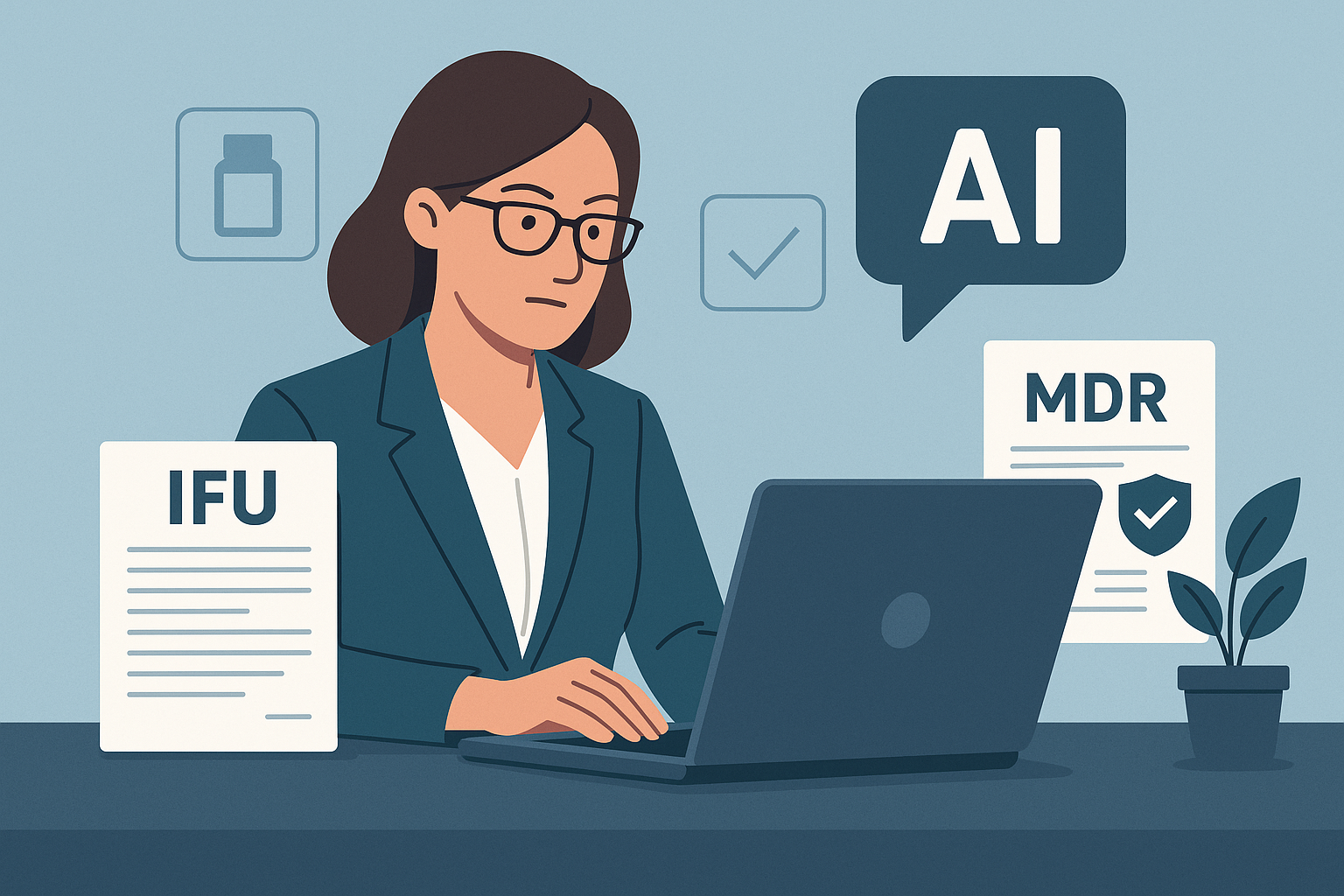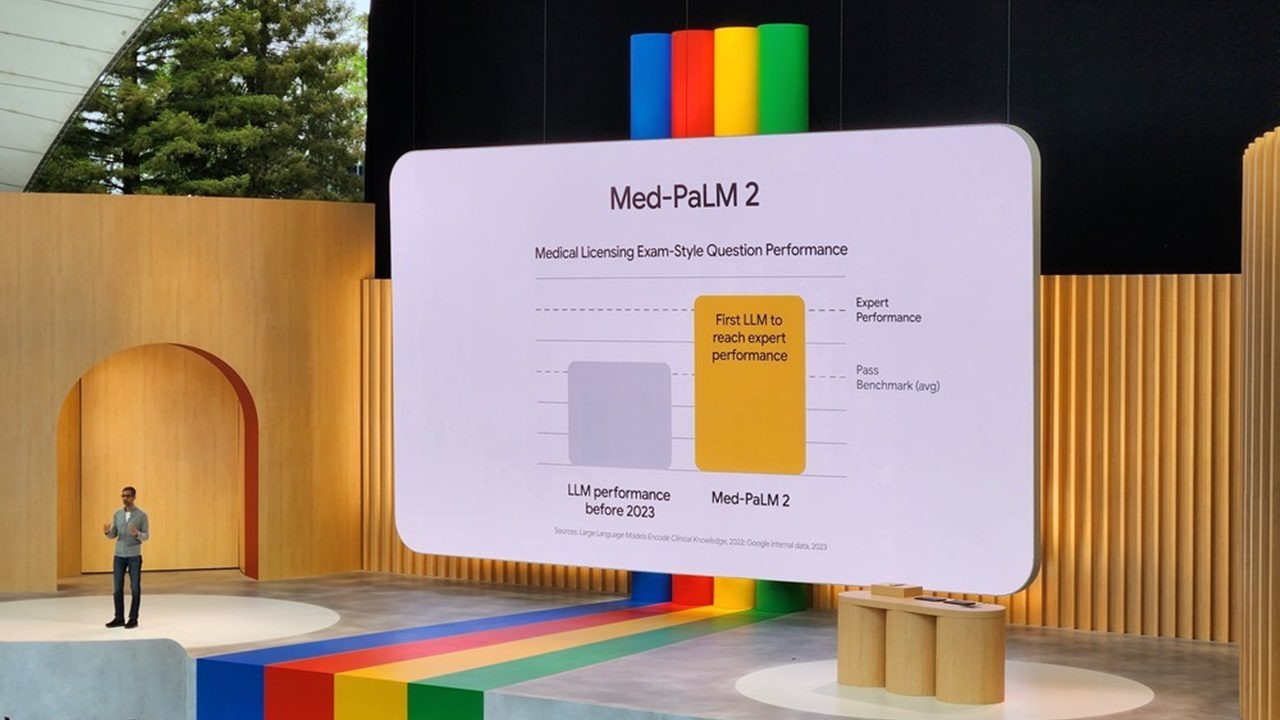
AI-generated voice-over has rapidly evolved from a technological curiosity into a practical operational resource within the communication strategies of many organisations in the healthcare sector. At the same time, the debate around its use has intensified and become increasingly polarised. On one side, pharmaceutical brands and medical device manufacturers recognise its efficiency, speed and scalability; on the other, voice professionals and trade unions are raising concerns about its impact on employment and the ethical implications associated with synthetic voices.
As is often the case with emerging technologies, the practical reality lies somewhere in between. AI voice-over is neither an absolute threat nor a universal solution. Above all, it is a tool that can deliver real value when used thoughtfully, under expert supervision and within a clearly defined framework.
A response to mounting pressure on costs and timelines
In today’s pharmaceutical and MedTech environment, the need to produce multilingual audiovisual content quickly and cost-effectively is growing steadily. Training, scientific marketing and medical affairs teams are working with tight timelines, multiple markets and budgets under constant scrutiny.
In this context, AI voice-over offers clear advantages. It makes it possible to generate narrated versions of training videos within hours, enables rapid updates when key messages or clinical indications change, and significantly reduces the costs associated with studio recording, talent scheduling or additional voice sessions.
For this reason, many life sciences companies are beginning to explore its use in internal training videos aimed at sales forces. These are functional materials designed to convey technical information or commercial messaging, where clarity and speed of deployment across markets are the primary priorities.
In such cases, AI can become an effective ally in scaling training programmes and ensuring greater narrative consistency between countries.
The invisible risk: pronunciation in a highly regulated environment
However, the use of synthetic voice-over in healthcare brings with it specific risks that are not always fully considered at the early stages of a project. The most significant relates to phonetic accuracy.
Unlike many other industries, healthcare communication is dense with complex terminology: active substance names, branded medicines, scientific nomenclature, clinical acronyms and the names of researchers or speakers. A pronunciation error can create confusion and may also project a lack of rigour or professionalism.
For instance, training materials for commercial teams frequently include clinical acronyms such as COPD, HER2, NSCLC or HbA1c, whose pronunciation varies depending on medical convention and country. An unsupervised AI voice-over may render them incorrectly or inconsistently across languages — for example, spelling them out in a market where they are commonly pronounced as acronyms, or the reverse. Errors in this type of terminology can hinder message comprehension or undermine the confidence of sales representatives who must communicate information with absolute precision.

The risks increase further when complex medicine names or active ingredients are involved. Terms such as dexamethasone, nivolumab or empagliflozin require fine phonetic adjustment to sound natural in each language. If AI relies on literal reading based on generic rules, the outcome may be an artificial or simply incorrect pronunciation.
Difficulties also frequently arise with proper names in webinars or scientific content. Mispronouncing the name of a researcher, hospital or academic institution can be perceived as a lack of attention to detail and may negatively affect the company’s professional image.
For this reason, the adoption of AI voice-over in healthcare should not be viewed as a fully automated process. It requires specialist linguistic supervision, manual phonetic refinement and final validation by experts who understand both medical terminology and the nuances of each language.
A hybrid model: technology combined with linguistic expertise
The key, therefore, is not to choose between human voice-over and AI voice-over, but to design hybrid models that leverage the strengths of both.
In internal training projects or operational content, AI can deliver efficiency, consistency and speed. However, ensuring effective communication quality requires the integration of processes such as:
- specialist terminology review
- customised phonetic dictionaries
- cultural adaptation of narrative tone
- final quality control by linguists or healthcare communication experts
This approach significantly reduces the risk of critical errors and allows technology to act as an accelerator rather than a source of reputational exposure.
Expert supervision also provides something AI still struggles to replicate fully: contextual judgement. Knowing when a pause alters the meaning of a sentence, when a subtle shift in intonation softens a sensitive message, or when a lexical choice may be inappropriate in a particular market.
A clear boundary: external corporate communication
One area where a growing consensus is emerging across the sector is the distinction between internal content and external corporate communication.
In corporate films, brand campaigns, patient-facing materials or high-level investor presentations, the professional human voice remains irreplaceable. This is not simply a matter of aesthetics, but of authenticity, empathy and credibility.
An experienced voice artist does far more than read a script. They interpret, shape meaning, create emotional connection and reinforce the brand’s sonic identity. In a sector such as healthcare, where trust is a critical asset, these elements take on clear strategic importance.
Replacing this human dimension with a synthetic voice in external contexts may be perceived as impersonal or overly automated — a particularly delicate issue when communication relates to health, wellbeing or therapeutic innovation.
Towards responsible and strategic adoption
The debate around AI voice-over is likely to remain intense in the coming years. The technology will continue to evolve, synthetic voices will sound increasingly natural and usage models will become more sophisticated.
For healthcare organisations, the real challenge will not be whether to use this tool, but how to integrate it responsibly within their global communication ecosystem.
This means defining clear usage criteria, implementing linguistic quality controls, safeguarding brand consistency and, at the same time, recognising the distinctive value of human talent in contexts where the voice does more than inform — it represents the organisation.
AI voice-over can be a powerful driver of efficiency and scalability. Yet, as with any innovation in regulated and sensitive environments, its true impact will depend on the ability to combine technology, expert oversight and long-term strategic vision.
Is your organisation ready to take that step with confidence?
Get in touch with us to assess your multimedia content and build a hybrid voice-over model that is accurate, compliant and aligned with both regulatory and brand challenges.