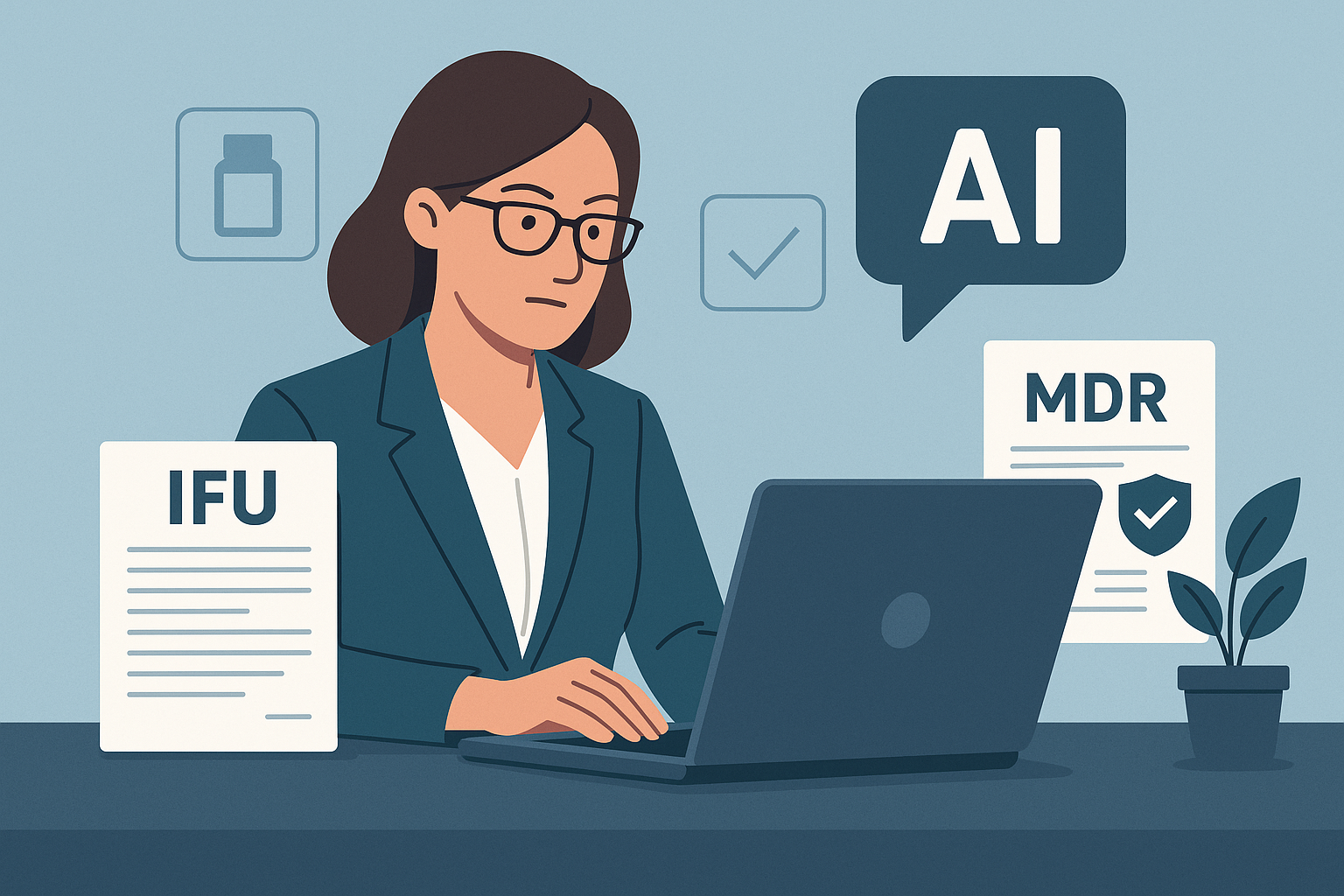
Healthcare and Life Sciences companies are under growing pressure. Demand for language services in this sector is rising by around 9.5% per year, driven by regulations such as the Medical Device Regulation (MDR) and the In Vitro Diagnostic Regulation (IVDR). The result? Large volumes of documentation to translate into multiple languages—often on increasingly tight timelines.
So how can organisations balance volume, cost and speed without compromising quality or regulatory compliance? The answer isn’t choosing between technology and human expertise—it’s combining both in a smart, risk-based way.
-
Segment by risk: not all documentation needs the same level of scrutiny
Strategic documentation management starts with one essential principle: risk-based segmentation. In practice, that means applying different translation workflows depending on how the content will be used.
This approach supports both Regulatory Affairs leaders, who need to reduce the risk of audit findings caused by incorrect terminology, and Procurement teams, who must optimise budgets without lowering standards.
For high-volume content, tight deadlines, or internal materials, AI-assisted translation with expert human review (aligned with ISO 18587:2017) is often the most effective option. It delivers speed and cost-efficiency while keeping qualified human oversight in place.
By contrast, translations produced in accordance with ISO 17100:2015 should be reserved for high-risk documents that will be printed, shared externally, or submitted to authorities. That includes critical content such as IFUs, SSCPs, SmPCs, patient information leaflets, and regulatory submission dossiers (RA dossiers).
When done properly, segmentation helps organisations focus their highest level of human expertise on the documents that matter most—without losing control across the wider documentation ecosystem.
-
Implement a “controlled AI” model to ensure quality and compliance
Using AI responsibly doesn’t mean letting technology run unchecked. A controlled AI model combines the efficiency of machine translation with a rigorous human review process—an approach that is especially relevant for Quality and Regulatory Affairs teams.
In this model, specialist linguists review and refine AI output to ensure terminology is accurate and consistent, content is clear and fit for purpose, and the final text meets the expectations of regulated environments.
When the process follows ISO 18587:2017, it also provides the traceability and auditable evidence needed to pass internal audits and notified body reviews without triggering non-conformities.
AI, yes—but never at the expense of compliance.
-
Use technology to scale and meet seemingly impossible deadlines
Regulations such as the MDR create challenges not only in terms of quality, but also scale. Between now and 2028, as MDR transition activities continue, many organisations will need to expand translation capacity to support broader European market coverage—potentially working in up to 24 languages.
For International and Export teams coordinating launches across multiple markets, this becomes a major logistical challenge.
Traditional workflows often struggle to keep up. A hybrid model—machine translation plus expert human review—makes it possible to process high volumes of documentation efficiently, from instructions for use (IFUs) to technical files and registration dossiers, while maintaining control, consistency and traceability.

The biggest advantage? Translation becomes more than a compliance requirement: it becomes an enabler of international growth, supporting faster and more coordinated product launches across markets.
-
Build “centaur teams”: expert review working alongside an AI engine
The real power of a hybrid model lies in collaboration. Rather than relying on humans or machines alone, “centaur teams” bring the best of both together: AI for speed, and human expertise for judgement.
In practice, expert reviewers validate the accuracy of AI-generated text, improve clarity and readability, and apply the context and critical thinking that technology alone cannot provide.
This approach is more reliable than machine translation on its own—particularly for regulated content—and more scalable than purely human translation when volumes are high and timelines are tight.
-
Optimise budgets and reinvest in the quality that truly matters
A hybrid approach also offers a clear financial advantage. By applying AI-assisted translation to lower-risk or internal documentation, organisations can free up a meaningful portion of their language budget—without losing oversight or control.
The key point is that this is not simply about cutting costs. It’s about reinvesting intelligently.
Freed-up budget can be redirected towards ISO 17100-aligned translation for the most critical and visible materials, such as the labelling patients read, the instructions for use that guide healthcare professionals, or the dossiers submitted to regulatory authorities.
This is how hybrid strategies support robust compliance across the entire documentation ecosystem—delivering the highest quality where it matters most, without requiring an unlimited budget.
Conclusion
In today’s demanding healthcare landscape, success doesn’t come from choosing between speed and quality. It comes from designing a smart language ecosystem.
By segmenting content by risk, implementing controlled AI workflows, scaling with technology, strengthening hybrid teams, and reinvesting savings strategically, translation stops being a simple cost centre and becomes a strategic enabler of market access.
So here’s the question worth asking: is your current translation process reducing time-to-market and supporting your international growth—or is it becoming your biggest regulatory bottleneck?